
Assessment
| Pediatric Pearls: | Signs & Symptoms: | Differential: |
| □ Use approved reference document for medication dosing, electrical therapy, and equipment sizes. | □ Bradycardia □ Crush syndrome □ DKA □ Cardiac arrest □ Missed dialysis □ Decreased PO/urine output | □ Arrhythmia □ Acute kidney injury □ Fluid overload |
Clinical Management Options
| EMT-B |
| • Oxygen, target SpO2 92 – 96% • BGL Assessment • Basic Airway Management as needed |
| Paramedic |
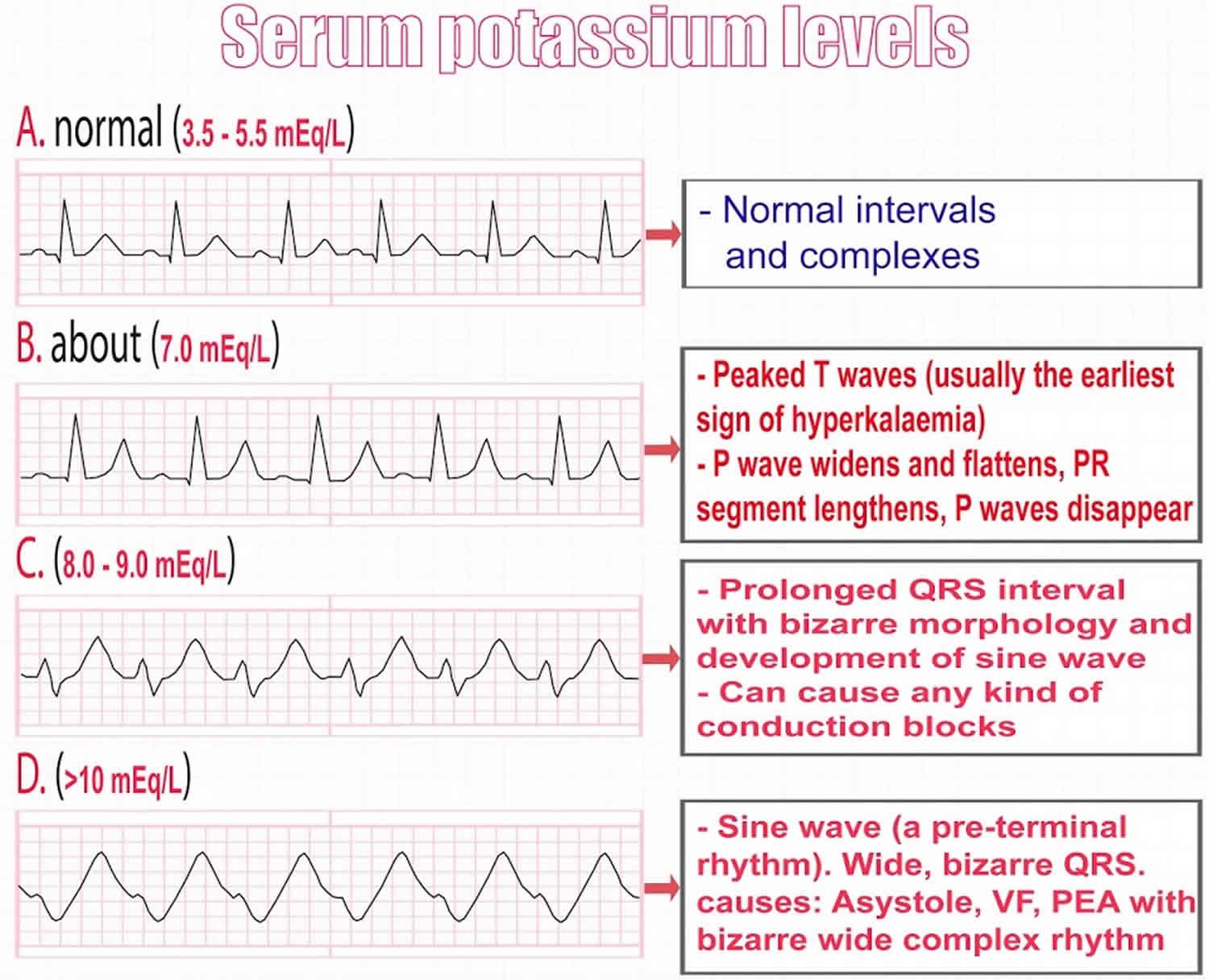
| • Vascular access • ECG Monitoring • Monitor for T-wave changes and treat with Calcium, Albuterol, and Sodium Bicarbonate if present |
Pearls
- Hyperkalemia should be suspected in patients with concern for crush injuries, DKA, or kidney injury.
- Give calcium first as this helps protect the heart from the impact of hyperkalemia. The albuterol and sodium bicarb are used to reduce the amount of potassium in the blood stream.
- Consider in patients who have had recent failure to thrive (decreased PO intake can lead to kidney injury and potassium imbalances)
- Hyperkalemia can have a wide range of EKG changes. The most classic EKG changes are below.
 CHEMS Field Treatment Guidelines